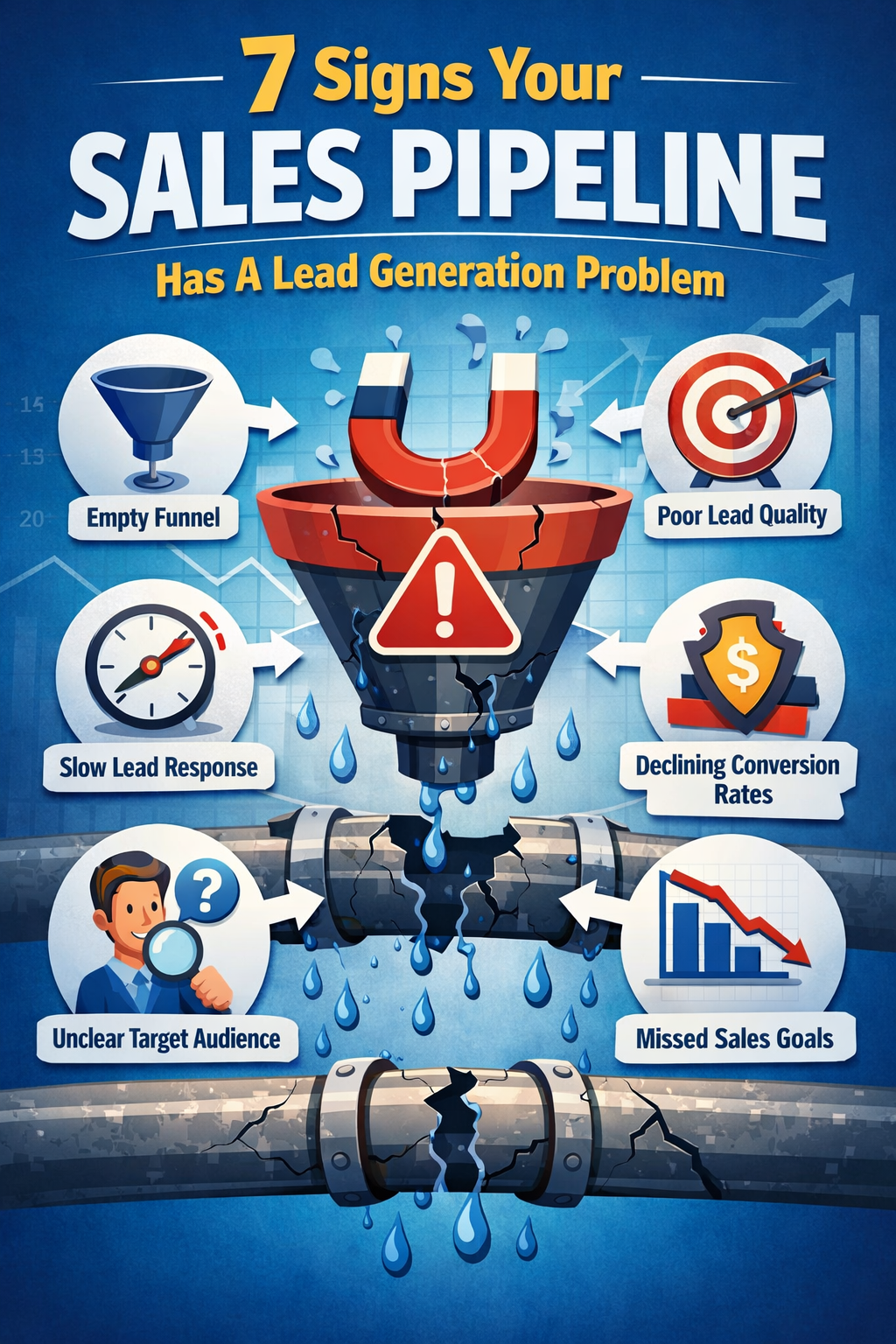
When pipeline performance drops, most businesses blame the sales team first.
They assume reps need better training, tighter scripts, more follow-up, or more pressure to close. Sometimes that is true. But in a lot of companies, the real issue starts earlier. The problem is not that sales cannot convert. It is that lead generation is feeding the pipeline with the wrong people, the wrong timing, or the wrong expectations.
That distinction matters.
A sales team can only do so much with weak inputs. If the pipeline is filled with poor-fit leads, early-stage browsers, vague interest, or accounts that were never likely to buy, the downstream numbers will look broken no matter how hard the team works. More calls, more meetings, and more follow-up will not fix a funnel that is being filled badly.
At Upwind, we think about pipeline problems as system problems first. Before blaming closing ability, we look at the full engine: who is entering the funnel, how they got there, how they are qualified, and whether the sales team is getting real opportunities or just activity disguised as opportunity.
If your pipeline feels busy but not productive, there is a good chance the issue is not just sales execution. It may be a lead generation problem wearing a sales problem mask.
Why Pipeline Problems Often Get Misdiagnosed
Pipeline problems are easy to misread because the pain usually shows up at the end of the process, not the beginning.
When deals stall, conversion rates fall, or forecasts become unreliable, leadership often focuses on the part of the system they can see most clearly: the reps, the calls, the demos, and the close rate. That feels logical, but it often misses the root cause.
Why Teams Blame Sales First
Sales is the most visible function in the pipeline. Reps are the people talking to prospects, moving deals through stages, and trying to generate revenue. So when revenue slows down, sales is usually the first team put under the microscope.
That is understandable, but it creates a diagnostic blind spot. If the wrong leads are entering the funnel, the sales team ends up carrying the consequences of a problem it did not create.
Why Lead Generation Problems Show Up Downstream
A weak lead generation system rarely announces itself clearly. It usually shows up later as low conversion, longer cycles, more objections, and unpredictable revenue.
That is why so many companies think they have a sales problem when they actually have an upstream targeting, qualification, or pipeline creation problem. By the time the issue becomes visible, it is already hurting sales performance.
Why Fixing The Wrong Problem Gets Expensive
When businesses misdiagnose the problem, they usually waste time on the wrong solutions. They invest in more coaching, more pipeline reviews, more rep accountability, or more pressure on close rates.
But if the underlying issue is bad lead generation, none of those changes will create consistent improvement. The business just ends up pushing harder on a system that is already misaligned.
Sign #1: Your Pipeline Looks Full, But Deals Rarely Move
This is one of the clearest signs that pipeline volume is being mistaken for pipeline quality.
On paper, things may look active. There are leads in the CRM, opportunities in multiple stages, and enough names in the funnel to make the top line feel healthy. But when you look closer, very little is actually progressing.
Why This Usually Points To Weak Lead Fit
A full pipeline should create movement. If it does not, the problem is often that too many leads should never have been in the funnel in the first place.
They may be loosely interested but not serious. They may be too small, too early, too misaligned, or too far from the real buying profile. That makes the pipeline look busy while hiding the fact that very little real opportunity exists inside it.
What It Looks Like In Practice
You see opportunities sitting in the same stage for weeks. Reps keep “working” deals that never become real buying conversations. Pipeline reviews sound active, but the substance is thin.
The business starts feeling like it has enough in the funnel, but revenue does not reflect that. That is usually not a closing problem. It is often a sign that the funnel is overfilled with false positives.
Sign #2: Your Sales Reps Spend Too Much Time Prospecting
Sales reps should prospect to some degree. That is normal.
But when reps spend too much of their time hunting for people to talk to instead of moving real conversations forward, it usually points to a lead generation capacity problem.
Why This Is A Lead Generation Issue
If the system is generating enough qualified opportunities, reps can spend more time selling. If they have to constantly build their own pipeline from scratch just to keep activity alive, something upstream is underperforming.
That does not always mean outbound is the wrong move. It means the business lacks a reliable and intentional pipeline creation system strong enough to support the sales function.
When Prospecting Starts Crowding Out Selling
You know this is happening when follow-up slips, proposal quality drops, and sales conversations become rushed because reps are still trying to create enough top-of-funnel activity.
Instead of spending their time qualifying, advancing, and closing, they are stuck trying to solve a demand problem in real time. That hurts every part of the pipeline.
Sign #3: Lead Volume Exists, But Lead Quality Is Weak
This is one of the most common problems in lead generation, especially in businesses that focus too heavily on lead counts.
It is easy to celebrate volume. More leads feels like growth. But volume without fit creates noise, not opportunity.
The Difference Between Activity And Opportunity
A lead is not the same thing as a legitimate sales opportunity. A name in the CRM, a form fill, or a booked call only matters if it is connected to a real need, a realistic fit, and a plausible buying path.
When the business optimizes for volume alone, the pipeline often gets flooded with low-quality entries that waste time and distort reporting.
Why Weak Lead Quality Clogs The Funnel
Bad leads do not just fail quietly. They consume rep time, crowd dashboards, confuse forecasting, and make it harder to see what is actually working.
The more poor-fit leads move into the pipeline, the harder it becomes to manage the real ones properly. That is when sales starts complaining about lead quality, and leadership starts wondering why so much activity creates so little revenue.
Sign #4: Sales Cycles Keep Getting Longer
Longer sales cycles are not always a sales-stage issue. Sometimes they are a sign that the wrong people are being brought into the funnel too early.
A longer cycle often means the lead was not ready, not aligned, or not qualified well enough before the sales process started.
Why Timing Problems Enter The Pipeline Early
Some leads are not bad because they will never buy. They are bad because they entered the process at the wrong time.
They may not have enough urgency yet. They may still be exploring, comparing, or gathering information. If those leads get pushed into the pipeline as if they are active opportunities, the cycle stretches out and momentum disappears.
What This Looks Like Inside The Funnel
Deals linger in qualification. Buyers go quiet between steps. Internal alignment never seems to happen. Next meetings take too long to schedule. Decisions keep getting pushed.
This kind of pattern often tells you that the top of funnel is not filtering timing and readiness well enough before leads are handed into sales.
Sign #5: Conversion Rates Are Low Across Multiple Stages
When conversion drops at one stage, that may point to a stage-specific issue.
But when conversion is weak across multiple stages, it often means the problem started before the sales process even began.
Why Low Conversion Often Starts Before The Call
If the wrong people are entering the pipeline, every later stage suffers. Qualification gets weaker. Needs are less urgent. Interest is less serious. Objections become more frequent. Close rates fall.
That is why low conversion is not always a sales skills issue. Sometimes the inputs are simply too weak to produce strong outputs.
Bad Inputs Create Weak Outputs
A weak lead generation system can damage the funnel in quiet ways. Messaging attracts the wrong audience. Targeting misses the real ICP. Offers create curiosity without real buyer fit.
Then sales gets handed a pipeline that looks active but converts poorly almost everywhere. At that point, the data is telling you something important: the funnel is filling with the wrong kind of demand.
Sign #6: Prospects Frequently Say They Are Not Ready Or Not A Fit
Every sales team hears these objections sometimes. That is normal.
But when they become frequent, repetitive, and predictable, they usually point back to a lead generation problem rather than just buyer hesitation.
Why Repeated Objections Point Back To Targeting
If too many prospects say they are not ready, not the right fit, or just exploring, your system may be attracting people outside the buying window or outside the ICP.
That does not mean the reps are failing to persuade them. It often means the business is creating conversations with the wrong people at the wrong stage.
What “Not Ready” Often Really Means
Sometimes “not ready” means the lead was never sales-ready to begin with. Sometimes it means the positioning drew interest without enough urgency. Sometimes it means the business is targeting awareness-stage contacts and treating them like decision-stage buyers.
In all of those cases, the issue lives earlier in the funnel than most teams want to admit.
Sign #7: Marketing And Sales Disagree On What A Good Lead Looks Like
This is one of the clearest structural signs that the lead generation system is not working the way it should.
When marketing celebrates lead volume and sales complains about lead quality, the pipeline becomes a battleground instead of a growth system.
Why This Misalignment Creates Waste
If one team is rewarded for generating names and the other is judged by closed revenue, bad incentives take over. Marketing sends what looks good in a report. Sales rejects what feels useless in practice.
That creates friction, lost trust, and a pipeline full of misclassified opportunities that hurt both execution and forecasting.
What Better Alignment Looks Like
Healthy systems share a definition of a good lead. They agree on fit, readiness, qualification signals, and what deserves pipeline attention.
When that alignment exists, the handoff gets cleaner, the reps trust the inputs more, and the business stops mistaking lead quantity for pipeline strength.
How Upwind Diagnoses Pipeline Problems Before Blaming Sales
At Upwind, we do not start with the assumption that underperformance is a rep problem.
We start by asking harder questions about the full sales engine. Are the right accounts entering the funnel? Is targeting disciplined enough? Is outreach creating genuine opportunities or just surface activity? Is qualification protecting the pipeline, or just passing names through?
That matters because real growth does not come from pressuring reps harder inside a broken system. It comes from tightening the inputs, strengthening the handoff, and building a cleaner flow from lead generation into sales execution.
This is also why we think about phone outreach, lead generation, CRM process, and sales improvement as connected parts of the same engine. If one part is weak, the whole system feels weaker.
A business with a lead generation problem often does not need more pipeline pressure. It needs better pipeline creation.
What To Fix First If These Signs Sound Familiar
Once you recognize the problem, the next step is not to overhaul everything at once.
The better move is to tighten the parts of the system that most directly affect lead quality and pipeline health.
Tighten Your Targeting
If the wrong audience is entering the funnel, fix that first. Revisit your ICP, your messaging, your channels, and the assumptions behind who you are trying to attract or reach.
Better targeting improves almost every downstream metric because it raises the baseline quality of the funnel.
Improve Qualification Standards
A healthier pipeline usually starts with a higher standard for what deserves sales attention. Not every interested person should become a pipeline opportunity.
Qualification should protect rep time and preserve pipeline integrity. That means being more disciplined about fit, timing, urgency, and buying potential.
Focus On Opportunity Quality, Not Lead Volume
A lot of businesses are unintentionally addicted to lead counts because they are easy to report and easy to celebrate.
But if those leads do not become meaningful opportunities, the metric is misleading. The real goal is not more names. It is more qualified conversations that have a real chance to move.
Clean Up The Handoff Between Lead Gen And Sales
Even strong lead generation can fail if the handoff into sales is weak. If definitions are fuzzy, context gets lost, or readiness is unclear, the pipeline suffers.
That is why the transition from lead creation to sales action needs to be structured. Clean handoffs create cleaner funnels.
Final Thoughts
A weak pipeline does not always mean you have a weak sales team.
Sometimes it means the system feeding the pipeline is off. The wrong people are entering. The timing is poor. Qualification is too loose. Volume is being mistaken for quality. And by the time the issue becomes visible, sales is left trying to rescue a funnel that never had enough real opportunity in it.
That is why diagnosis matters so much.
If your pipeline looks active but rarely turns into revenue, do not assume the answer is more pressure on the reps. Step back and look at the inputs. Look at the targeting, the handoff, the lead standards, and the kind of demand your system is actually creating.
Because in a healthy sales engine, the pipeline should not just look full. It should move.
FAQs
How Do You Know If Your Sales Pipeline Has A Lead Generation Problem?
You usually see it in the quality of the funnel. The pipeline may look full, but deals stall, conversion rates stay low, reps complain about lead quality, and too much time gets spent prospecting instead of selling.
Why Is My Pipeline Full But Not Closing?
That often means the pipeline is filled with weak-fit or poorly timed leads. Volume may look healthy, but the actual buying intent, urgency, or alignment is too low to support real movement.
Can Bad Lead Generation Hurt Sales Performance?
Yes. Poor lead generation affects everything downstream. It creates weaker conversations, lower conversion rates, longer cycles, and more wasted rep time.
What Are Signs Of Poor Lead Quality?
Frequent “not a fit” objections, low urgency, weak qualification, long deal cycles, low conversion across stages, and a heavy gap between lead count and real opportunity count are all strong signs.
Why Are My Sales Reps Spending Too Much Time Prospecting?
That usually means the business does not have a reliable enough lead generation system feeding the pipeline. Reps end up carrying the burden of both creating and converting demand.
What Is The Difference Between A Sales Problem And A Lead Generation Problem?
A sales problem usually shows up in how opportunities are handled once they are real. A lead generation problem shows up in the type, fit, timing, and quality of the opportunities entering the pipeline in the first place.
How Do You Fix A Lead Generation Problem In The Pipeline?
Start by improving targeting, tightening qualification, aligning marketing and sales around what counts as a good lead, and focusing on opportunity quality instead of just lead volume.
Why Do Deals Stall Even When Pipeline Volume Looks Strong?
Because pipeline volume can be misleading. If too many leads are low-fit, early-stage, or poorly qualified, the funnel looks healthy on the surface but lacks enough real opportunities to move consistently.