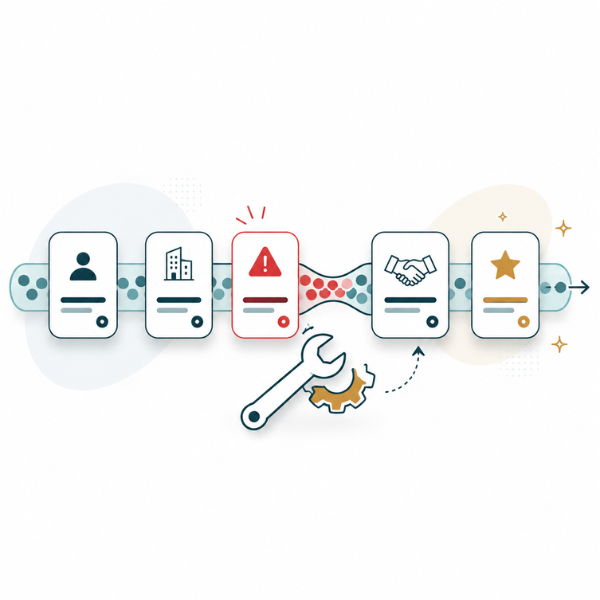
Revenue does not usually slow down because one deal disappears. It slows down because flow across the pipeline gets weaker, slower, and less predictable over time. A stage starts filling with stalled deals, follow-up gets inconsistent, proposals stop converting, or weak opportunities keep moving farther than they should.
That is what makes sales pipeline bottlenecks so expensive. They do not always look dramatic at first, but they quietly reduce conversion, waste rep time, and make forecasting less reliable. Teams often respond by pushing for more leads, more calls, or more activity when the real issue is that the pipeline is not moving cleanly.
At Upwind, we look at bottlenecks as system problems, not isolated sales moments. The goal is not to optimize every stage at once. The goal is to find the real constraint, fix the root cause, and create smoother revenue flow from first conversation to close.
What A Sales Pipeline Bottleneck Really Is
A sales pipeline bottleneck is the point in your process where opportunities slow down, pile up, or fall out at a higher-than-expected rate. It is the stage where momentum breaks and revenue starts leaking.
That bottleneck might show up in discovery, demo, proposal, negotiation, or even at the qualification stage. What matters is not just where the slowdown appears. What matters is whether that slowdown is limiting the rest of the pipeline.
It Is The Constraint That Limits Revenue Flow
Think of the pipeline like a system of connected stages. If one stage starts trapping deals or pushing too many of them out, the rest of the sales process feels the impact.
That is why bottlenecks matter so much. They do not just hurt one stage. They drag down conversion across the entire pipeline and make growth harder to predict.
It Often Looks Like A Late-Stage Problem
A lot of teams notice the pain at the end of the process. Deals stall in proposal. Negotiations drag on. Closing rates dip. It is easy to assume the problem lives there.
In reality, the root cause often starts earlier. Weak qualification, poor discovery, unclear next steps, or generic demos can create late-stage friction long before the team notices the damage.
How Pipeline Bottlenecks Usually Show Up
Bottlenecks rarely announce themselves with a label. They show up in patterns, and those patterns are usually visible before they become severe.
That is why diagnosis matters. If you know what to look for, pipeline problems stop feeling random.
Conversion Drops Between Stages
One of the clearest signs of a bottleneck is a sharp stage-to-stage drop-off. If plenty of opportunities make it into discovery but very few move into proposal, that gap deserves attention.
The same applies later in the process. If proposals are going out but only a small fraction advance, the issue may not be volume. It may be fit, clarity, timing, or decision-maker access.
Deals Sit Too Long In One Stage
Time in stage is another strong signal. When deals linger longer than normal in the same part of the process, that usually means the next step is unclear or difficult.
Sometimes this points to buyer hesitation. Sometimes it points to internal sloppiness. Either way, long stage durations usually signal friction worth investigating.
The Pipeline Looks Full But Feels Weak
A crowded pipeline can create false confidence. On paper, it looks like there are plenty of opportunities. In reality, many of those deals may be old, inactive, or unlikely to close.
That kind of clutter hides the real problem. It makes the pipeline feel larger than it really is while masking where flow is actually breaking down.
Why The Real Problem Is Often Upstream
Sales teams often try to fix bottlenecks where they are most visible. That seems logical, but it can lead to wasted effort if the real cause started earlier.
This is one of the biggest mistakes in pipeline management. Fixing the symptom is not the same as fixing the constraint.
Closing Problems Often Start In Qualification
When weak-fit leads move too far into the pipeline, closing rates naturally suffer. The team spends time preparing proposals and pushing deals that never had the right level of urgency or fit in the first place.
That makes closing look like the issue, even though the real problem started when poor opportunities were allowed to advance.
Demo Problems Often Start In Discovery
If prospects go quiet after a demo, the team may assume the presentation needs work. Sometimes that is true, but often the deeper issue is that discovery never uncovered the right pain points or buying context.
A demo built on shallow information will always feel less relevant. That makes the drop-off look like a demo problem when it is really a discovery problem.
How To Find Sales Pipeline Bottlenecks
You do not need a complicated diagnostic model to find bottlenecks. You need clean data, honest review, and the discipline to look at the pipeline stage by stage.
This is where CRM visibility matters. A strong diagnosis starts with what the pipeline is actually doing, not what the team thinks it is doing.
Pull Stage-To-Stage Conversion Rates
Start by looking at how deals move from one stage to the next. Where is the biggest drop? Where does momentum weaken most sharply?
That stage is often your first clue. It may not contain the full answer, but it usually tells you where the system is under strain.
Check Time In Stage
Next, look at how long deals sit in each part of the process. A stage with unusually long duration often signals uncertainty, poor follow-up, or weak internal discipline.
This is especially useful when conversion does not look terrible on the surface. A stage may still be slowing revenue even if deals eventually move through it.
Review Aged Deals And Closed-Lost Patterns
Old opportunities tell a story. So do consistently lost deals. Look for patterns in why deals are aging out, going dark, or falling apart.
You are not just looking for a reason code. You are looking for repeated process failure. If the same issue appears again and again, it is probably not random.
Talk To Reps And Buyers
Numbers matter, but context matters too. Reps usually know where conversations start getting messy. Buyers often reveal where confusion, hesitation, or delays begin.
Use both. CRM data shows where the friction is. Human feedback helps explain why it is happening.
The Most Common Pipeline Bottlenecks And How To Fix Them
Not every sales process breaks in the same place, but certain bottlenecks show up again and again. The key is not to memorize a list. The key is to recognize which one is affecting your revenue flow now.
That is where practical fixes become more useful than broad process advice.
Weak Lead Qualification
When poor-fit leads move into the pipeline too easily, reps waste time on deals that were never likely to close. That slows the whole system down and makes later stages look worse than they are.
The fix is to tighten qualification criteria. Make sure reps are clear on what has to be true before a deal advances. If the team cannot explain why an opportunity belongs in the pipeline, it probably does not.
Shallow Discovery
A weak discovery call creates weak follow-up, weak demos, and weak proposals. If the team is not uncovering real pain, business impact, and buying context early, the rest of the process becomes guesswork.
The fix is to improve how discovery is run. Better questions, better listening, and clearer next steps can improve the quality of every downstream stage.
Generic Demos Or Presentations
When prospects engage early but disappear after the demo, the issue is often relevance. The presentation may be accurate, but it does not feel tied closely enough to the buyer’s real situation.
The fix is to build demos around what discovery uncovered. The more tailored the conversation feels, the less likely the opportunity is to lose momentum after the presentation.
Proposal And Pricing Friction
Some deals move well until pricing shows up. Then they slow down or vanish. This often happens when value was not established clearly enough earlier or when pricing arrives without the right stakeholder context.
The fix is not always a new pricing model. Sometimes the real answer is earlier alignment, stronger business-case framing, and clearer expectations before the proposal is sent.
Negotiation Delays
When deals stall in negotiation, the problem is often less about objections and more about missing decision-makers, unclear urgency, or internal buyer uncertainty.
The fix is to identify the buying process earlier. If the right people are not involved until the end, the deal is already at risk.
Follow-Up And CRM Sloppiness
Deals also stall because the process after the conversation is loose. Notes are incomplete, next steps are vague, and follow-up timing is inconsistent.
The fix here is usually operational. Stronger CRM discipline, better stage definitions, and automated reminders can clean up a surprising amount of pipeline friction.
How To Fix Bottlenecks Without Rebuilding Everything
One of the fastest ways to make bottlenecks worse is to panic and change too much at once. When every part of the process gets adjusted together, it becomes harder to tell what actually helped.
The better approach is focused and deliberate.
Fix The Biggest Constraint First
Find the stage or issue causing the most damage and start there. Do not spread attention evenly across every stage just because they all need improvement eventually.
Pipeline performance improves fastest when the biggest drag on flow gets addressed first.
Tighten Stage Exit Criteria
Each stage should mean something. If deals move forward without meeting a clear standard, the pipeline gets noisy and performance becomes harder to trust.
A simple rule helps: do not let opportunities advance based on hope. Move them forward based on evidence.
Clean Out Dead Opportunities
Dead deals distort the pipeline and make diagnosis harder. They give the team a false sense of coverage while hiding real conversion problems underneath.
Regular cleanup is not administrative busywork. It is part of maintaining pipeline visibility and keeping the team focused on viable opportunities.
Improve Handoffs And Follow-Up
A lot of bottlenecks are not caused by big strategic failures. They are caused by sloppy transitions. Discovery does not flow cleanly into demo. Proposal does not flow cleanly into decision-making. Follow-up is inconsistent.
Better handoffs improve flow. So does faster, clearer follow-up supported by CRM structure and automation where appropriate.
How Upwind Finds The Real Bottleneck In A Sales Engine
Upwind approaches pipeline bottlenecks as sales engine constraints, not just isolated stage issues. The focus stays on finding the point where revenue flow slows down, identifying what is causing it, and fixing the issue with the biggest impact first.
That means looking beyond the stage where the slowdown appears. A proposal problem may begin in discovery. A closing issue may trace back to weak qualification. A stalled pipeline may come from inconsistent follow-up, poor CRM discipline, or unclear ownership of next steps.
Upwind reviews the full sales process to find the real constraint. That includes outreach quality, qualification standards, discovery performance, stage conversion, follow-up execution, and pipeline hygiene. This broader view makes it easier to spot where friction starts and why deals lose momentum.
From there, the goal is simple: improve flow. Upwind helps businesses tighten process gaps, strengthen handoffs, improve follow-up discipline, and build a cleaner sales engine that supports more predictable revenue growth.
What To Measure After You Make Changes
Once you fix a bottleneck, you need a clear way to measure whether the adjustment actually worked. Without that, teams fall back into opinions instead of performance.
A few metrics matter more than the rest:
- Stage-to-stage conversion rate
- Time in stage
- Opportunity aging
- Win rate by segment or source
- Pipeline velocity
These metrics help you see whether flow is improving. They also make it easier to avoid changing too many variables before the first fix has had time to show results.
Final Thoughts
Sales pipeline bottlenecks are rarely solved by adding more activity to a broken flow. They are solved by finding the real constraint, tracing it to the root cause, and fixing it with discipline.
That is what makes the difference between a busy pipeline and a productive one.
A strong sales process should help opportunities move with clarity. It should make qualification sharper, follow-up cleaner, and forecasting more believable. When bottlenecks are identified early and handled well, revenue stops feeling random and starts feeling much more manageable.